Canada’s New Laws and Rules in August 2026: What Actually Matters for Newcomers
Ten federal changes take effect this month, from student grants to a brand new foreign influence registry. Here’s the version that flags what actually touches your study permit, work permit, or PR application.
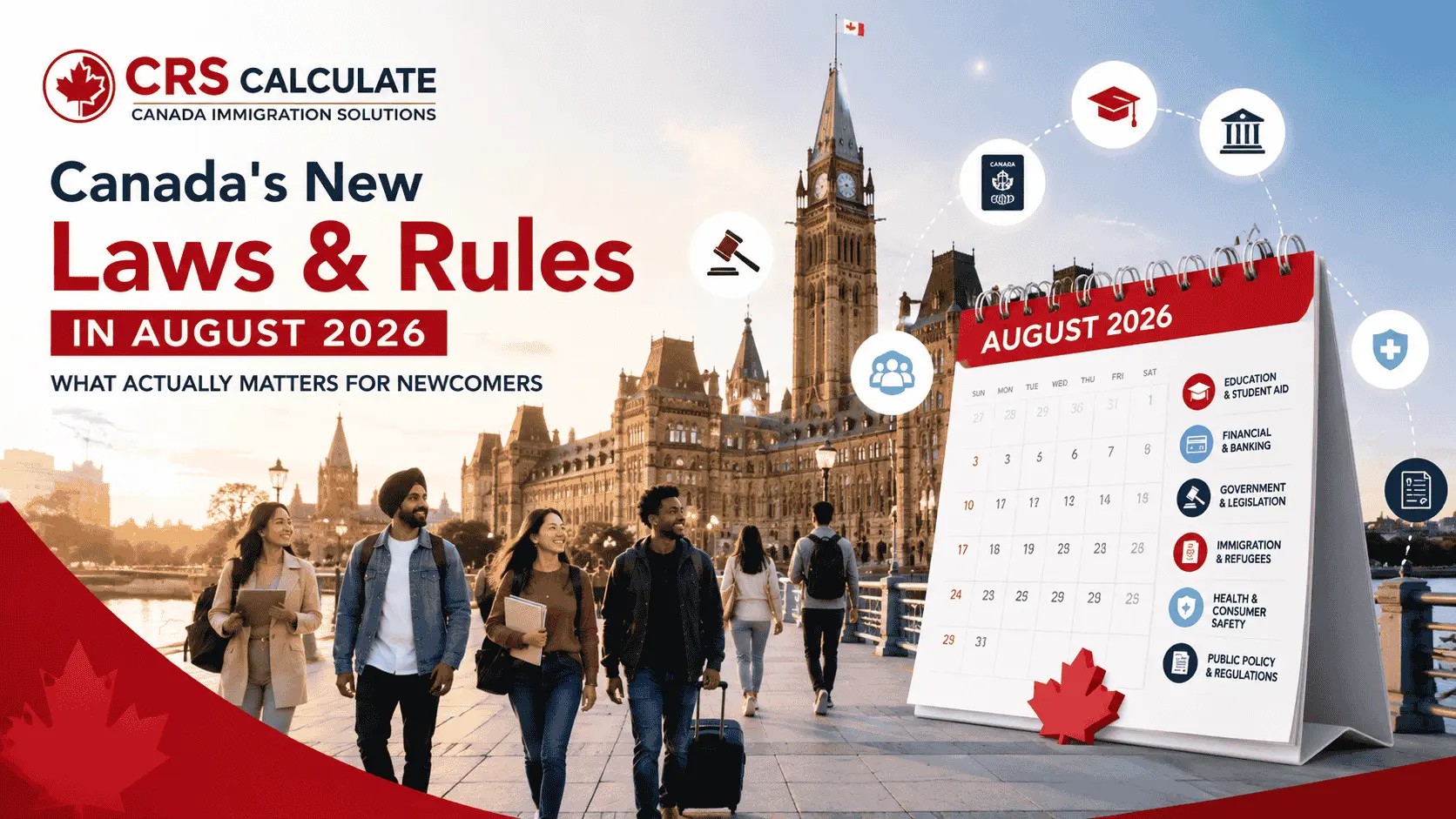
August rarely slows down in Ottawa, and this year is no exception. Ten federal changes take effect this month, touching everything from student aid to banking to a brand new foreign influence registry. Most roundups treat these as generic news items. Here’s the version that actually flags what matters if you’re an international student, a work permit holder, or working through a PR application.
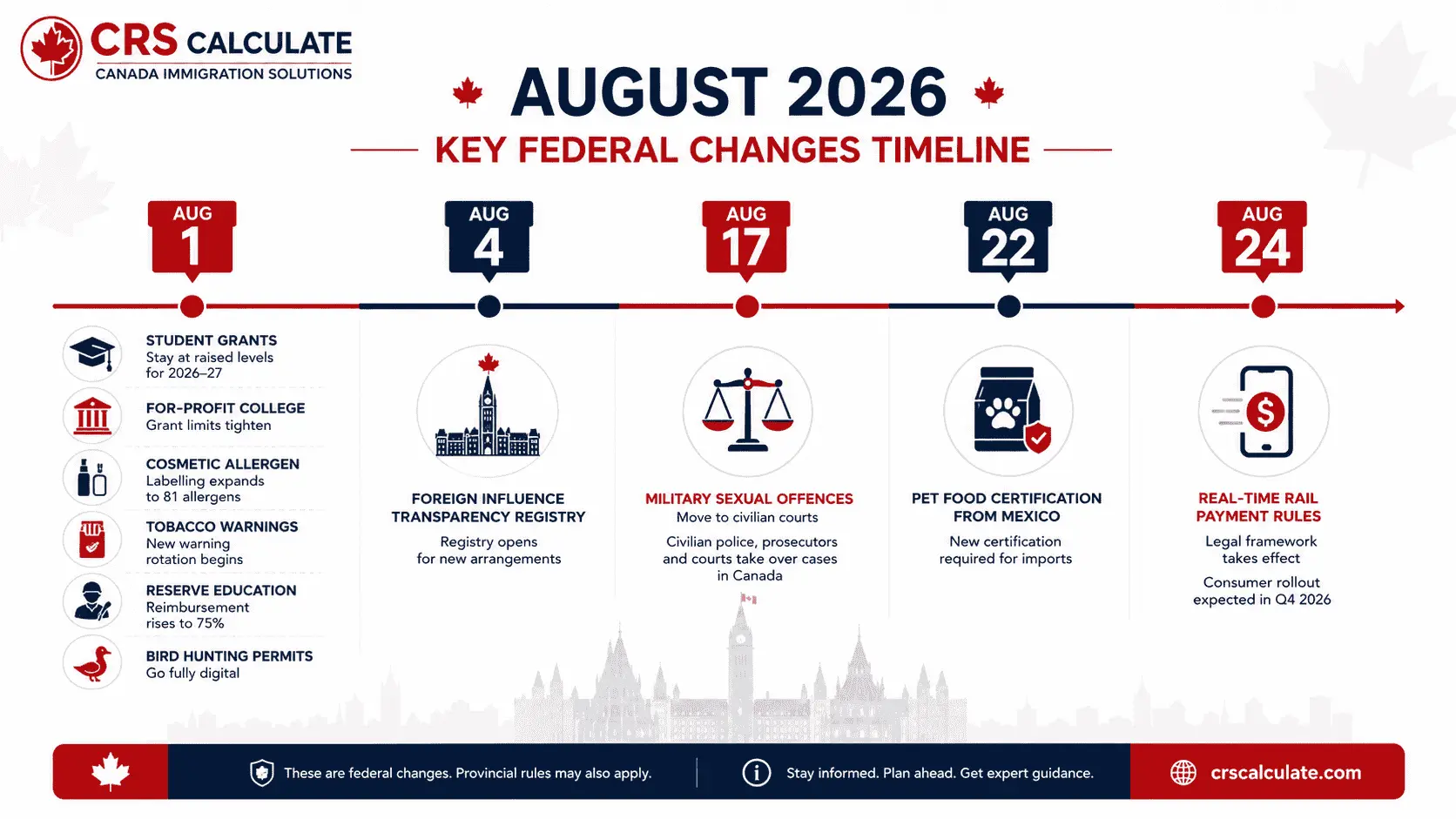
Quick Look: Every Change and Its Date
| Date | Change | Who Feels It First |
|---|---|---|
| Aug 1 | Student grants stay at raised levels for 2026-27 | Students, families |
| Aug 1 | For-profit college grant limits tighten | Private college students |
| Aug 1 | Cosmetic allergen labelling expands to 81 | Cosmetics firms, shoppers |
| Aug 1 | New tobacco warning rotation | Retailers, smokers |
| Aug 1 | Reserve education reimbursement rises | Primary Reserve members |
| Aug 1 | Bird hunting permits go fully digital | Hunters |
| Aug 4 | Foreign Influence Transparency Registry opens | Anyone with foreign arrangements |
| Aug 17 | Military sexual offences move to civilian courts | CAF members |
| Aug 22 | New pet food certification from Mexico | Importers |
| Aug 24 | Real-Time Rail payment rules take effect | Banks, consumers |
Who These Changes Affect Most
1. Student Grants Hold Steady Through 2026-27
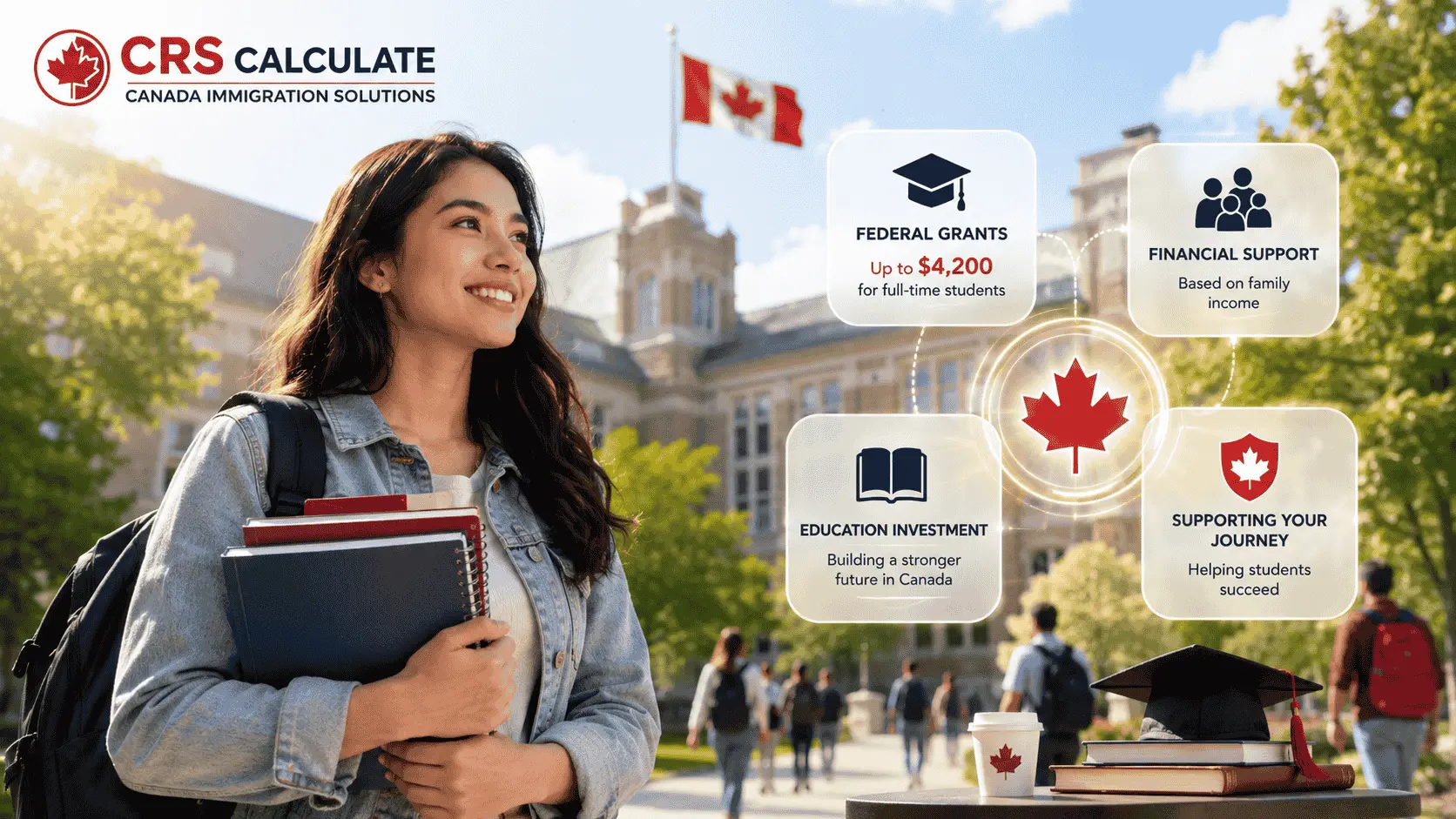
Full-time students can still get up to $4,200 for an eight-month study period, part-time students up to $2,520, and students with disabilities $2,800. These numbers apply from August 1, 2026 through July 31, 2027, and around 720,000 students are expected to benefit.
Eligibility runs on family income. A single applicant qualifies for the full grant under $38,474 and loses it entirely past $69,987, with the scale climbing for larger families.
What This Means If You’re an International Student
If you’re on a study permit and your family is applying for provincial aid alongside federal grants, these thresholds decide how much support actually lands in your account this year. Quebec, Nunavut, and the Northwest Territories still run their own systems, so don’t assume these numbers apply if you’re studying there.
2. Private For-Profit Colleges Lose Grant Access
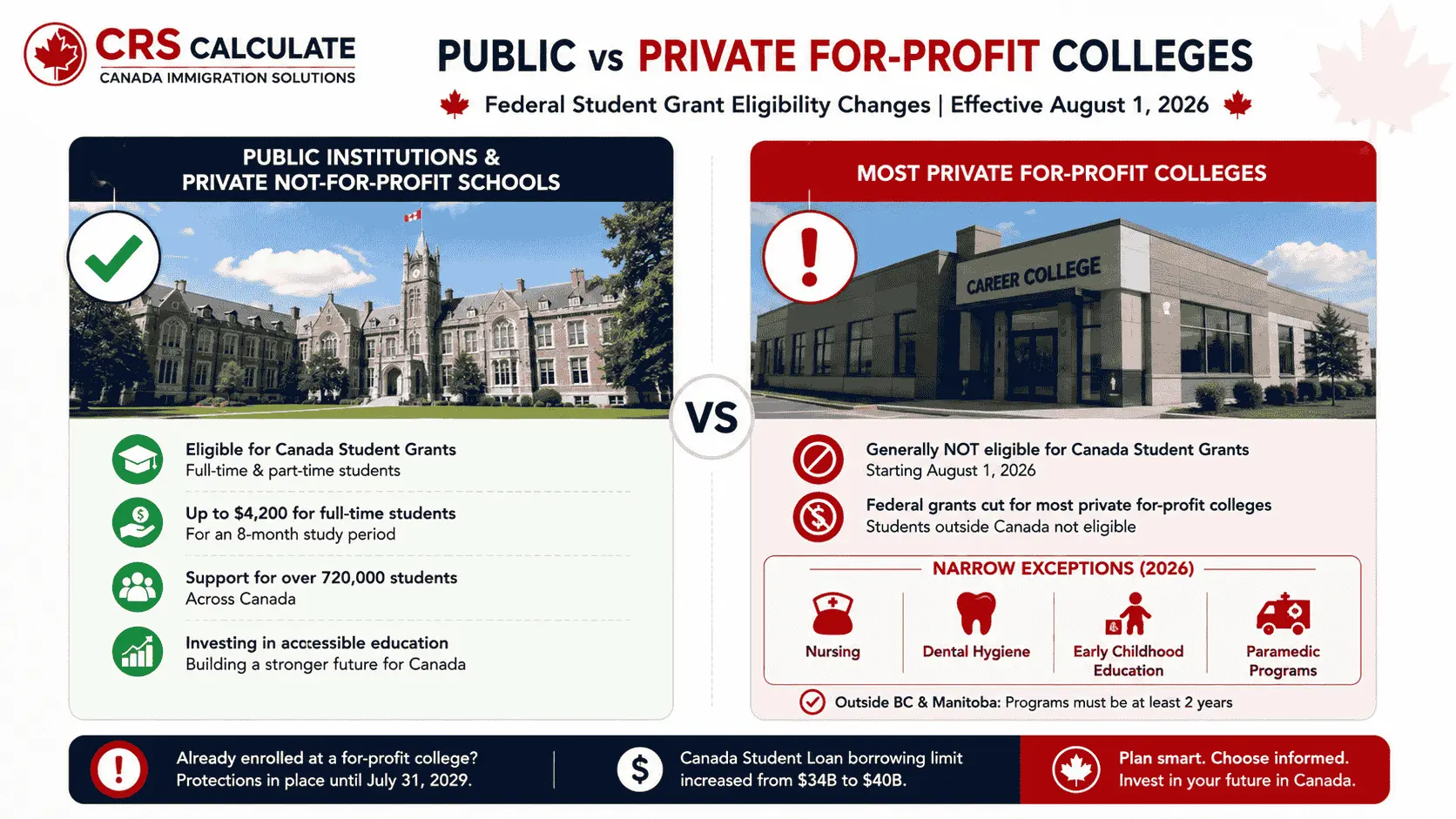
This is the one prospective students genuinely need to read closely. Starting August 1, the Canada Student Grant for Full-Time Students generally goes only to public institutions and private not-for-profit schools. Most private for-profit colleges are cut out.
There’s a narrow exception this year for nursing, dental hygiene, early childhood education, and paramedic programs, and outside BC and Manitoba those programs need to run at least two years.
Study Permit Impact
If you’re evaluating a study permit path through a private career college, this changes your financial math before you commit. Students at for-profit schools outside Canada lose federal aid entirely from August 1, though some already enrolled get protection until July 31, 2029. The government also raised the Canada Student Loan borrowing cap from $34 billion to $40 billion, so lending itself isn’t drying up, it’s just being redirected.
3. Foreign Influence Transparency Registry Opens August 4
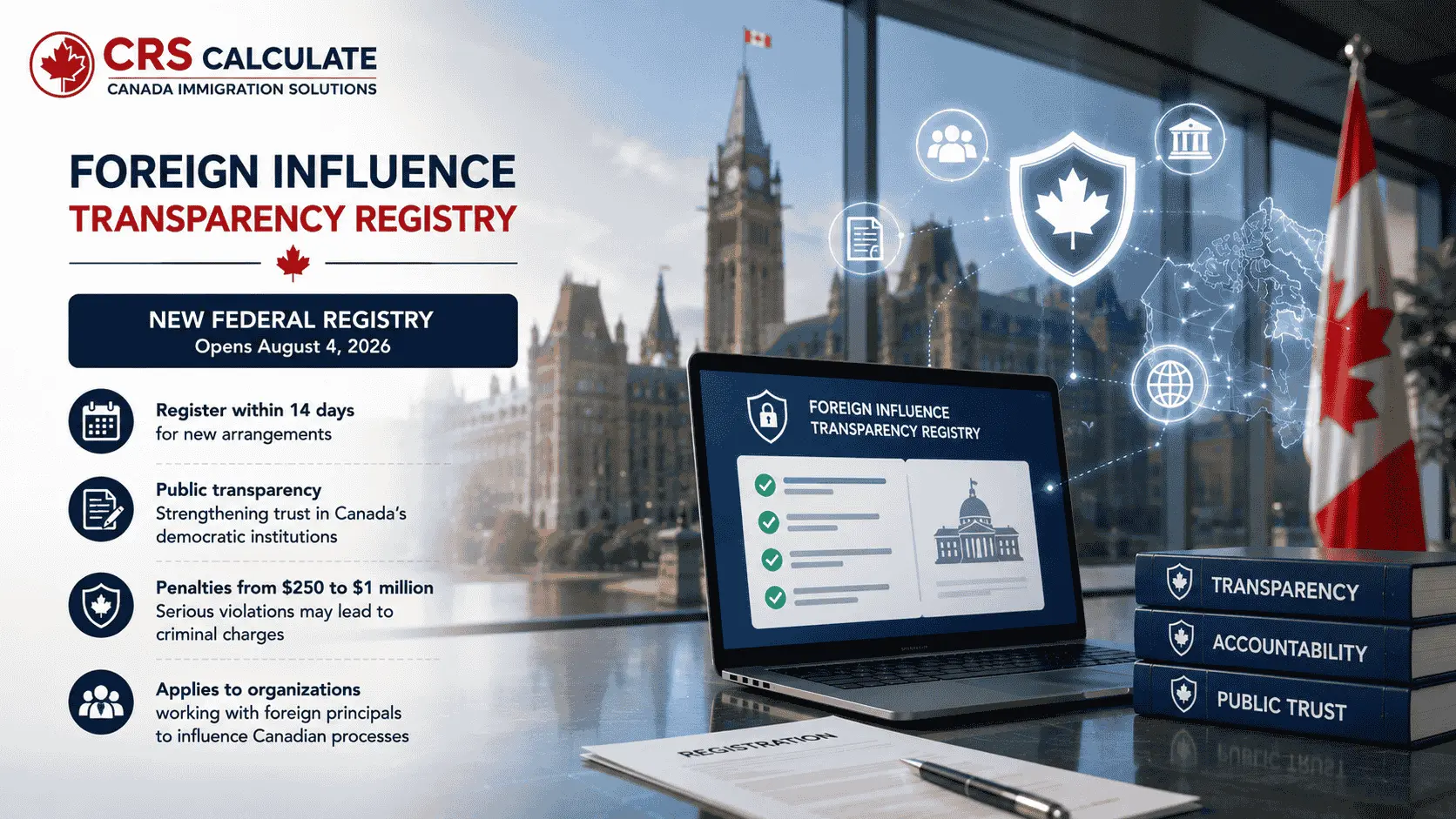
This is new territory for Canada, and it’s worth understanding even if you don’t think it applies to you. The Foreign Influence Transparency and Accountability Act creates a public registry overseen by Commissioner Anton Boegman, a former BC chief electoral officer.
The Three-Part Registration Test
Registration kicks in when three things line up: there’s an arrangement with a foreign principal, the goal is influencing a Canadian political or government process, and the activity involves things like contacting officials or providing funding.
Deadlines and Penalties
- New arrangements: registration required within 14 days
- Arrangements existing before August 4: deadline is October 3, 2026
- Penalties range from $250 to $1 million, with criminal enforcement possible in serious cases
Where This Touches Newcomers
Community organizations, diaspora advocacy groups, and anyone doing paid consulting work connected to a foreign government or entity should check whether their activities fall under this. It’s not aimed at individual immigrants, but organizations with cross-border political ties need to pay attention now, not in October.
4. Military Sexual Offences Head to Civilian Courts
From August 17, amendments to the National Defence Act pull certain Criminal Code sexual offences out of military jurisdiction entirely. Civilian police, prosecutors, and courts take over cases alleged to have happened in Canada. The Armed Forces retain authority to act immediately, meaning arrests or evidence preservation, before handing things to civilian authorities.
5. Real-Time Rail Payment Rules Take Effect August 24
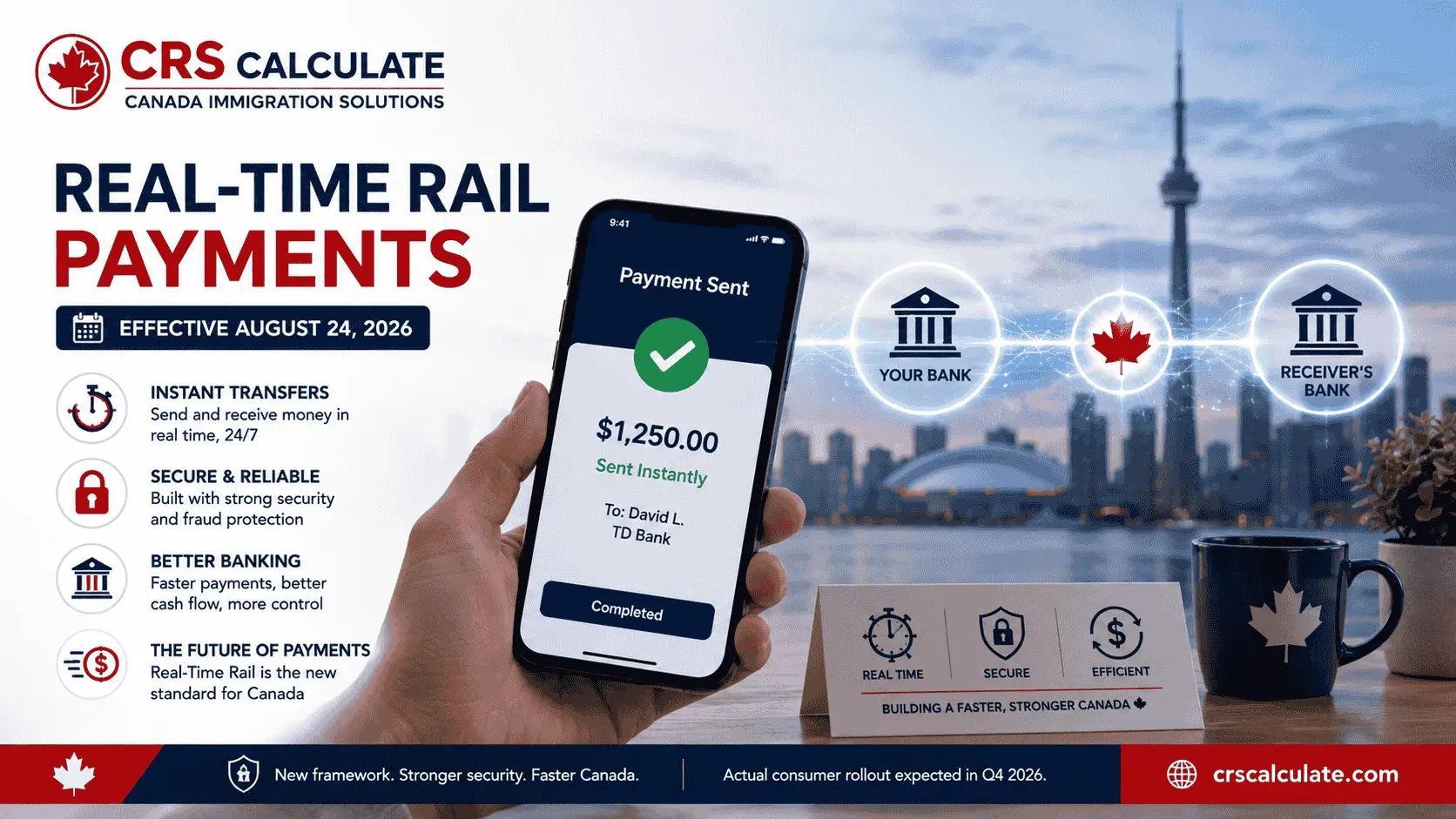
Here’s where a lot of coverage gets sloppy. The Canadian Payments Association bylaw and Real-Time Rail rules becoming legally effective on August 24 does not mean instant bank transfers start that day. This date sets the legal and operational framework, covering clearing, settlement, and security requirements for banks.
Legal Framework vs. Consumer Rollout
Payments Canada currently expects the actual consumer-facing rollout in Q4 2026. If your banking app doesn’t suddenly offer instant transfers this month, that’s expected, not a glitch.
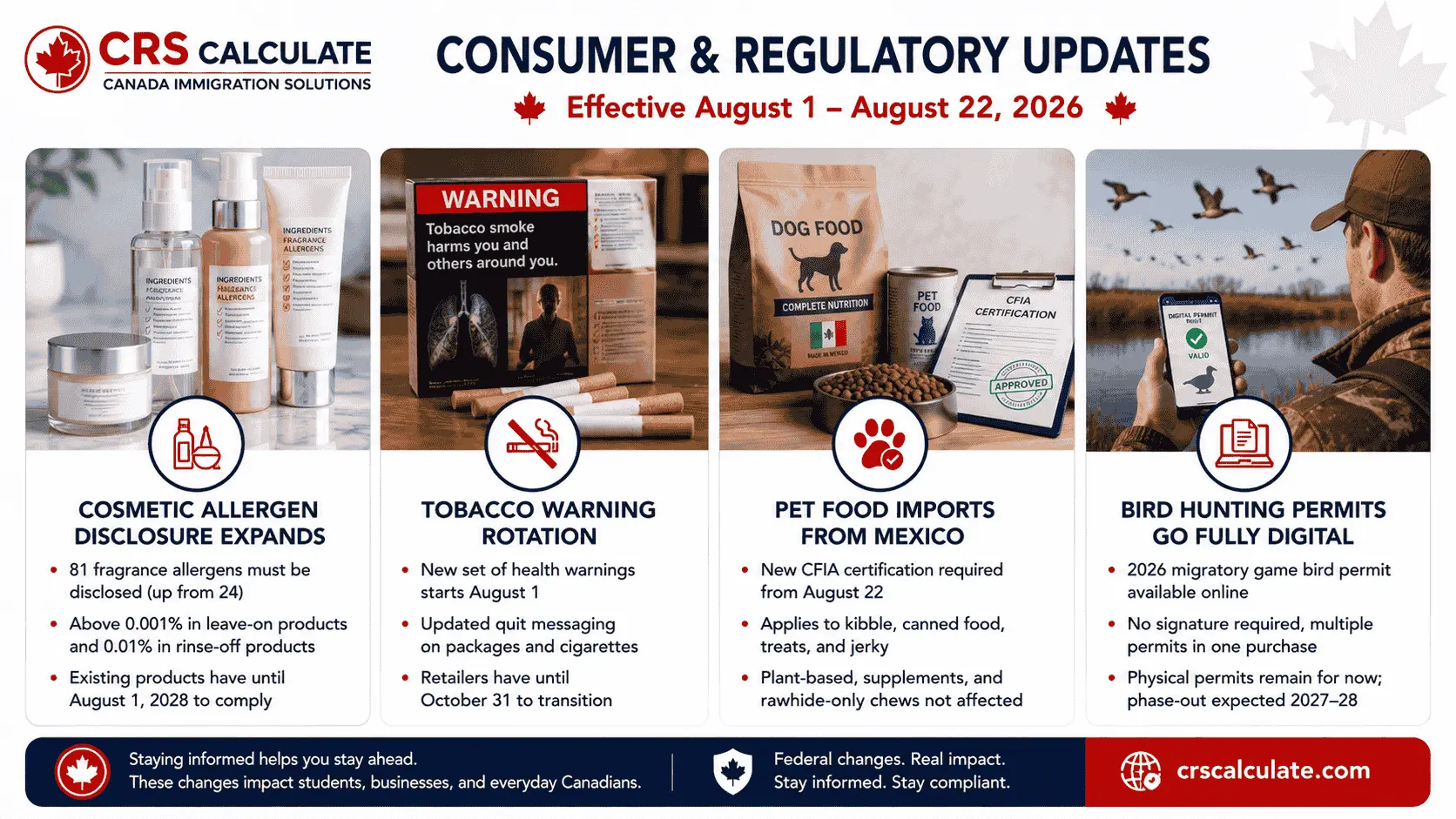
6. Cosmetic Allergen Disclosure Expands
New cosmetic products entering the Canadian market from August 1 must disclose 81 fragrance allergens, up from 24. Disclosure kicks in above 0.001% in leave-on products and 0.01% in rinse-off products. Products already on shelves get until August 1, 2028 to comply.
7. Tobacco Packaging Enters a New Warning Cycle
A new rotation of federal health warnings starts August 1 on cigarettes and related products, with updated quit messaging appearing directly on individual cigarettes where required. Retailers have until October 31 to finish transitioning older stock.
8. Pet Food Imports From Mexico Need New Certification
Businesses importing kibble, canned pet food, treats, or jerky from Mexico need updated CFIA certification after August 22. Until then, either the old or new certificate works. Plant-based pet food, supplements, and rawhide-only chews aren’t affected.
9. Reservists Get a Bigger Education Benefit
Primary Reserve members starting academic years on or after August 1 can now claim 75% of eligible education costs, up to $7,500 per year and $30,000 over their service. Tuition, books, lab fees, and exam costs all count.
10. Bird Hunting Permits Go Fully Online
The 2026 migratory game bird hunting permit is now available through Environment and Climate Change Canada’s new Regulatory Services Platform. Permits no longer need a signature, multiple permits can be bought in one transaction, and past orders show up in an online dashboard. Physical permits are sticking around for now but expect a phase-out starting as early as 2027-28.
Not Sure How These Changes Affect Your Immigration Plans?
Get a free, personalized assessment from our RCIC-certified team before you make a decision based on outdated information.
Does This Override Provincial Rules?
No. These are federal changes operating in federal jurisdiction. Provinces still run their own student aid, licensing, and consumer protection rules, so check both levels if your situation touches provincial territory too.
What Should You Actually Do With This
If you’re studying in Canada or planning to, check whether your school still qualifies for federal grants before you enrol for the 2026-27 year. If you run a business with any cross-border political or advocacy component, look at the Foreign Influence Registry requirements now, the 14-day window moves fast. Everyone else can mostly file this under “know it exists” rather than “act immediately.”
For anything touching your immigration pathway directly, run your numbers through our CRS Score Calculator or book a free assessment with our RCIC-certified team before assuming a rule change affects your application. You can also track upcoming rounds on our Next Draw Prediction page and see how recent invitations compare on our Latest Express Entry Draw update.
Verified Against Official Sources
Every date and figure in this guide was checked against the Canada Gazette, federal regulations, and official government pages current to August 2026. Our RCIC-certified partner team reviews every immigration-relevant update before publication. This article is general information, not legal or immigration advice, and rules can change as new regulations are registered later in the month.
Frequently Asked Questions
The registry targets organizations and individuals in formal arrangements with foreign principals aimed at influencing Canadian political or government processes. It is not aimed at individual PR or citizenship applicants. It could matter if you’re involved with an advocacy group, community organization, or paid consulting work tied to a foreign government.
Grant eligibility and study permit renewal are handled separately, but if your school loses federal grant eligibility because it’s a private for-profit institution, your financial support for the 2026-27 year could shrink. Confirm your school’s status before assuming your funding stays the same.
No. August 24 is only the date the legal framework takes effect. Payments Canada expects the consumer-facing launch of instant payments in the fourth quarter of 2026, not this month.
Full-time students can receive up to $4,200 per year, part-time students up to $2,520 per year, and students with disabilities $2,800 per year. These rates apply from August 1, 2026 to July 31, 2027.
Most students at private for-profit colleges lose eligibility for the Canada Student Grant for Full-Time Students starting August 1, 2026. Exceptions apply for nursing, dental hygiene, early childhood education, and paramedic programs during the 2026-27 loan year.
No. Starting August 17, 2026, jurisdiction over Criminal Code sexual offences alleged to have happened in Canada moves to civilian police, prosecutors, and courts. The Armed Forces can still act immediately to prevent harm or preserve evidence before handoff.
Federal rules apply within federal jurisdiction across the country. Provinces run their own student aid, licensing, and other systems, so you may need to check provincial rules where both levels apply.
Anyone in an arrangement with a foreign principal aimed at influencing a Canadian political or government process, where the activity involves contacting officials, sharing information, or providing funding or services. New arrangements must register within 14 days, existing ones by October 3, 2026.
Explore Our Immigration Tools & Guides

Get Clarity on Your Canadian Immigration Path
Rules change every month. Our RCIC-certified team turns these updates into a plan built around your specific situation.